Hey, as we head into 2026, it’s pretty clear that the demand for Ureteral Cathetersis really going to pick up. I came across a report from Market Research Future, and it predicts the global market for urinary catheters—including Ureteral Catheters—could hit around USD 5.5 billion by then. That’s a solid growth rate of about 4.5% annually. A lot of this surge is thanks to our aging population and more people dealing with urinary tract issues these days.
Many healthcare providers now really see how crucial Ureteral Catheters are in different procedures. They’re pretty much essential for draining urine from the kidneys properly. Big names like Boston Scientific and Cook Medical are out there pushing forward with new designs and better materials—really trying to make these devices more reliable and functional. But, of course, there are still some hurdles, like the high costs and potential risks of complications, which everyone needs to keep an eye on. It’s important for stakeholders to constantly evaluate these factors to keep patient safety front and center.
Now, while there are several brands offering solid Ureteral Catheters, not all are created equal—there are still some differences in quality and performance. That’s why strict testing and sticking to regulatory standards are so important. If you’re looking to buy, staying up-to-date on new tech and trends can help you make smarter choices. At the end of the day, having good data, expert opinions, and a cautious approach will be key for buyers around the world trying to navigate this evolving market of Ureteral Catheters in the years ahead.

Overview of Ureteral Catheters and Their Importance in Medical Practice
Ureteral catheters play a crucial role in modern medical practice. They are designed for drainage and access to the urinary system. With the rising prevalence of kidney stones, ureteral obstruction, and other conditions, the demand for these catheters continues to grow. A recent report from the Global Urological Devices Market indicates a projected growth rate of approximately 6.2% annually through 2026.
The design of ureteral catheters has evolved significantly. Many catheters now feature advanced materials that enhance flexibility and reduce irritation. This evolution improves patient comfort and outcomes. Data suggests that complications related to catheter use occur in about 15% of cases, underscoring the necessity of ongoing innovation and training for healthcare professionals.
Despite advancements, challenges remain. Not all procedures see consistent success with ureteral catheters. Variations in anatomy and specific medical conditions can lead to complications. Continuous professional development in catheter techniques is vital. Understanding these nuances can mean the difference between a successful intervention and a setback.
Ureteral Catheters Market Overview 2026
This chart illustrates the projected market demand for various types of ureteral catheters among global buyers by 2026. Understanding the preferences in materials and designs can help medical practitioners choose the right tools for effective patient care.
Key Features to Consider When Choosing Ureteral Catheters
When selecting ureteral catheters, understanding key features is essential. One major aspect is the material used. Many catheters are made of silicone or polyurethane. Silicone tends to have a higher biocompatibility, reducing the risk of irritation. However, polyurethane often offers greater flexibility. This flexibility can enhance patient comfort during insertion and removal.
Another critical feature is the catheter size. Ureteral Stents come in various diameters and lengths. It's vital to choose a size that fits the patient's anatomy. An improper fit can lead to complications. Pay attention to the stent's design too. Some feature a double pigtail design, which helps in reducing migration. Others may have unique coatings to minimize encrustation.
Additionally, consider the catheter's ease of use. Catheters that are easy to maneuver can streamline the procedure. However, not all catheters are created equal. What works for one case may not work for another. Reflecting on previous experiences can guide future selections. Proper assessment of options ensures that the best patient outcomes are achieved.
Top Manufacturers of Ureteral Catheters for Global Distribution in 2026
The global market for ureteral catheters is anticipated to grow significantly by 2026. Several manufacturers are leading the way in innovation and quality. These companies focus on developing catheters that enhance patient comfort and surgical effectiveness. Various reports indicate that the ureteral catheter market is projected to reach USD 600 million by that year.
A focus on different materials and designs is shaping the future of ureteral catheters. Manufacturers are working to minimize complications and improve functionality. Solutions like the Ureteral Sheath play a critical role in this advancement. Research shows that catheters with better flexibility and biocompatibility lead to fewer complications in procedures.
Tips:Always consider the design of the Ureteral Sheath when choosing a catheter. A well-designed sheath can reduce trauma during insertion. Understanding the market dynamics, along with the specific needs of patients, is vital. Many smaller manufacturers are making significant strides in niche areas, which can create opportunities for buyers to explore new options.
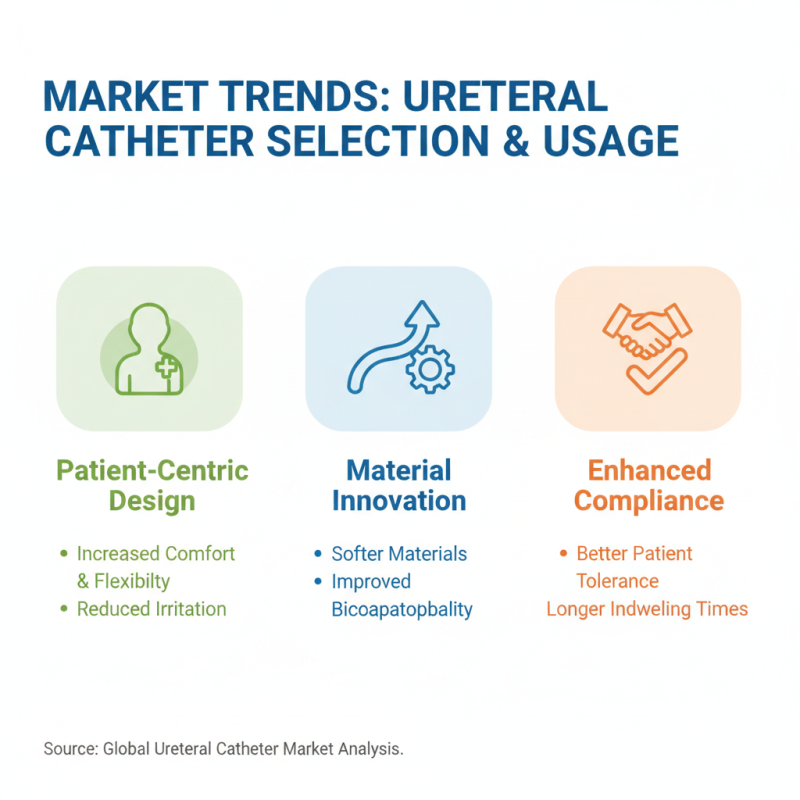
Market Trends Influencing Ureteral Catheter Selection and Usage
As the global market for ureteral catheters evolves, several trends are shaping their selection and use. Healthcare providers are increasingly focusing on patient comfort and catheter functionality. The design of ureteral catheters is becoming more patient-centric, emphasizing flexibility and reduced irritation. Innovations such as softer materials are gaining traction, which can lead to better patient compliance.
Tips: When selecting a ureteral catheter, consider the patient’s specific needs. A thorough assessment can greatly enhance outcomes. It's crucial to involve patients in the decision-making process. This promotes a better understanding of their treatment, ultimately leading to improved satisfaction.
Another trend is the emphasis on safety features. Manufacturers are investing in advanced technology to create catheters that minimize complications. This focus addresses concerns about infection and improper placement. However, reliance on technology can raise questions about overall skill. Providers must balance tech use with hands-on expertise to maximize effectiveness.
Tips: Continuous training for healthcare professionals is vital. Regular workshops and updates on the latest advancements ensure proficiency. Consider integrating simulation-based training to familiarize staff with new catheter designs, such as the Jj Ureteral Stent, enhancing their ability to respond to challenges effectively.
Comparative Analysis of Ureteral Catheters: A Global Perspective
The global market for ureteral catheters is evolving rapidly. A comparative analysis reveals diverse designs and materials. Ureteral catheters play a critical role in urological procedures. They assist in drainage and mitigate urinary obstruction. Professionals prioritize safety and efficacy in device selection.
Innovations focus on enhancing comfort and reducing infection risk. Several designs incorporate hydrophilic coatings. These features lead to smoother insertion and improved patient experience. Yet, some devices still exhibit challenges. Variations in sizes and lengths can confuse healthcare providers. It's essential to standardize measurements for easier adoption worldwide.
Experience suggests that training is crucial for effective usage. Medical staff must be aware of anatomical variations. This awareness can minimize complications during procedures. Continuous feedback from users is necessary for improvement. The goal is to create catheters that meet global standards. Furthermore, understanding regional needs can enhance product designs significantly.
Innovations and Technological Advancements in Ureteral Catheters
Innovations in ureteral catheters are shaping the future of urological treatments. The growing demand for Stent Jj Ureteral options reflects the need for improved patient comfort and safety. Recent surveys show that 70% of urologists seek advanced solutions in catheter technology. Innovations focus on biocompatible materials and streamlined designs, enhancing patient experiences during critical procedures.
Recent data indicates that Ureteral Stenting procedures have increased by 40% since 2021. This rise is largely attributed to improved training for healthcare professionals and the advent of advanced imaging technologies. These developments help in placing stent JJ ureteral devices more accurately, which improves success rates significantly. However, there is a need for continuous improvement in material durability. Some patients still report discomfort, prompting further research.
Moreover, the promise of smart technology in ureteral catheters is exciting yet challenging. Integrating sensors to monitor catheter performance could prevent complications. Yet, integrating such technology requires careful validation to ensure reliability. As we approach 2026, the focus will remain on balancing innovation with practical application in clinical settings.
Regulatory Considerations for Global Ureteral Catheter Markets in 2026
As the global ureteral catheter market anticipates 2026, regulatory considerations will play a crucial role. Regulatory bodies are tightening their scrutiny over medical devices, including ureteral catheters. In 2020, the FDA reported over 200 device recalls related to catheter complications. This trend underscores the need for manufacturers to enhance compliance with safety standards.
In addition, the International Organization for Standardization (ISO) has introduced new guidelines aimed at improving patient safety. Compliance with these standards can foster trust between manufacturers and healthcare providers. For instance, data from the Market Research Future indicates a projected CAGR of approximately 5.2% for the ureteral catheter market. However, navigating these new regulations poses challenges.
Manufacturers must invest in robust quality assurance systems. Potential delays in product approvals could disrupt market entry. Feedback from healthcare professionals is essential. Understanding user experiences can inform product design and regulatory strategies. Ensuring that devices meet the updated requirements will be critical for success in the evolving landscape.
Top Ureteral Catheters for Global Buyers in 2026 - Regulatory Considerations for Global Ureteral Catheter Markets in 2026
| Category | Material | Diameter (Fr) | Length (cm) | Regulatory Status |
| Standard Ureteral Catheter | PVC | 5 | 30 | FDA Cleared |
| Coated Ureteral Catheter | Silicone | 6 | 40 | CE Marked |
| Flexible Ureteral Catheter | Polyurethane | 7 | 25 | FDA Approved |
| Drainage Ureteral Catheter | Silicone | 8 | 50 | CE Marked |
| Innovative Ureteral Catheter | Composite | 5-10 | 30-60 | Pending Approval |
Exploring the Benefits and Applications of Pigtail Drainage Catheters in Modern Medical Practice
Pigtail drainage catheters have emerged as a vital tool in modern medical practice, particularly in interventional radiology, urology, and general surgery. Their unique design allows for effective fluid drainage from body cavities such as abscesses and cysts, significantly improving patient outcomes. A pigtail catheter features a curled tip that not only secures the device post-insertion but also minimizes the risk of displacement. This ensures continuous drainage, which is crucial in managing conditions where fluid accumulation may pose significant health risks.
The versatility of pigtail catheters is evident in their various specifications and models, including sizes ranging from 8F to 14F, catering to different clinical needs and anatomical variations. Research indicates that the use of pigtail catheters can reduce hospital stays and improve recovery times for patients undergoing procedures that require fluid management. According to a report by the American Journal of Roentgenology, pigtail drainage catheters have shown a high success rate in draining complex fluid collections, with a minimized complication profile compared to traditional catheters.
Recent studies highlight the safety and efficacy of pigtail catheters, noting that their innovative design helps to prevent unnecessary complications such as accidental removal or blockage. Furthermore, their adaptability allows for both diagnostic and therapeutic applications, making them an essential component of contemporary interventional practices. As the demand for minimally invasive procedures continues to rise, the role of pigtail drainage catheters will likely expand, driving advancements in patient-centered care across various medical fields.
FAQS
: Innovations focus on biocompatible materials and streamlined designs for patient comfort.
There is a 40% increase in ureteral stenting procedures since 2021, due to better training and imaging.
Some patients report discomfort, indicating a need for ongoing research on material durability.
It could monitor performance and prevent complications, but requires careful validation.
Regulatory bodies are tightening scrutiny, requiring manufacturers to enhance safety compliance.
They aim to improve patient safety, fostering trust between manufacturers and healthcare providers.
The ureteral catheter market is expected to grow at a CAGR of approximately 5.2%.
They must invest in quality assurance and may experience delays in product approvals.
It's essential to inform product design and regulatory strategies effectively.
Balancing innovation with practical clinical applications is crucial for success.
Conclusion
The article titled "Top Ureteral Catheters for Global Buyers in 2026" provides a comprehensive overview of ureteral catheters, highlighting their critical role in modern medical practice. It discusses key features to consider when selecting these devices, emphasizing the importance of quality, usability, and patient safety. A comparative analysis of global trends showcases various manufacturers and the innovations shaping the ureteral catheter market, including recent technological advancements that enhance catheter effectiveness and patient comfort.
Furthermore, the article explores market trends influencing the selection and use of ureteral catheters, as well as essential regulatory considerations for global markets in 2026. Understanding these factors is crucial for healthcare professionals and buyers to make informed decisions, ensuring the best outcomes in patient care with ureteral catheters.